Traditional style: classic, symmetrical and settled
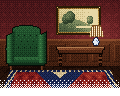
Traditional is an interior design style drawn from classic European rooms of the 18th and 19th centuries: dark polished wood such as mahogany, walnut and cherry, symmetrical layouts, panelled walls, rich fabrics such as velvet and damask, patterned rugs, framed paintings and considered collections.
What is traditional style?
Traditional style is the look of a long-established house: a room that seems to have been furnished over generations, not bought in a weekend. It is orderly and symmetrical. The wood is dark and polished, the fabrics are heavy and rich, the walls carry paintings, and the shelves carry books and china that someone has collected with care.
It draws on the classic European rooms of the 18th and 19th centuries. Furniture designs spread through pattern books: Thomas Chippendale's The Gentleman and Cabinet Maker's Director, first published in 1754, showed English, French rococo, Chinese and Gothic styles. A century later William Morris's firm, founded in 1861, made the wallpapers and printed textiles that many traditional rooms still wear.
The traditional look in five signs
- Dark, polished wood. Mahogany, walnut or cherry, with turned or curved legs and brass handles.
- Symmetry. A pair of chairs, a pair of lamps, a sofa centred on the fireplace.
- Pattern on fabric and floor. Florals, damask and stripes, over a rug in the Persian manner.
- Walls with detail. Panelling, a cornice, a dado rail, deep skirting boards.
- Framed paintings and collections. Gilt frames, a wall of books, china behind glass.
Traditional colours
There are two ways to do it. Keep the walls pale, in parchment or cream, and let the dark wood and the fabrics bring the colour. Or paint the walls one deep shade, such as burgundy or forest green, and lighten the room with cream lampshades and gold frames. Either way the colours are deep and soft, never bright.
- #E8D8B0ParchmentWalls, lampshades, the mounts in frames.
- #C8B67EOld goldFrames, brass, a fringe.
- #76282ABurgundyA wall, velvet, the rug.
- #1C4A28Forest greenAn armchair, a lampshade.
- #1E2C5ANavyThe rug's pattern, china.
- #502614MahoganyFurniture and panelling.
Traditional materials, furniture and lighting
- Woods
- Mahogany, walnut, cherry and oak, polished to a soft shine. Carving and inlay are welcome.
- Fabrics
- Velvet, damask, brocade, chintz and wool, finished with piping, fringe or braid.
- Other materials
- Brass, gilt, marble, porcelain, cut glass and leather.
- Furniture
- A wing chair, a buttoned leather sofa, a sofa with rolled arms, a pedestal table, a sideboard, a glazed bookcase. Shapes are curved and generous.
- Lighting
- Table lamps in pairs with pleated fabric shades, wall lights beside the mirror, a brass light over a painting and a chandelier in the dining room.
Traditional room by room
A traditional living room
Arrange the seats around the fireplace: a sofa facing it, or two sofas facing each other, with a matching chair at each side. Dress the windows fully. Two rules from UK shops: fit the pole at least 15 cm above the window frame, and choose curtains whose combined width is about twice the pole's length. The curtain size calculator turns your window into sizes to buy. Hang paintings in a group, with the same gap between frames every time. A rule designers use is 8–15 cm (see how high to hang pictures).
A traditional dining room
A polished table, upholstered chairs, a sideboard with a lamp at each end and a chandelier or pendant over the centre of the table. Candlesticks and a bowl of flowers finish it.
A traditional bedroom
A wooden or upholstered headboard, a pair of bedside lamps, lined curtains and wallpaper in a floral or a trailing leaf. A standard UK roll is 10.05 m long and 53 cm wide, and every roll should come from one batch. The wallpaper calculator counts the rolls.
Traditional style on a budget, in a rented flat
Dark wooden furniture is often inexpensive second-hand, which makes this style cheaper than it looks.
- Rearrange in pairs. Centre the sofa, and put matching things at either side of it. That is free.
- Buy one good dark piece. A chest of drawers, a side table or a bookcase from an auction or a charity shop.
- Change the lampshades. Pleated fabric shades on the lamps you own.
- Collect frames. Old gilt and wooden frames often cost little. Fill them with prints, maps or botanical pages.
- Put the books out. A full bookshelf is the most traditional decoration there is.
If you cannot put nails in the walls, lean framed pictures on a shelf, a mantelpiece or the top of a chest.
What to avoid
- The museum. If nobody dares sit down, it has gone too far. Keep the sofas deep and the lamps low.
- Dark on dark on dark. Dark walls, dark wood and dark floors need pale shades, a light rug or cream paintwork between them.
- Ornaments spread thin. Group a collection in one place, where it reads as a collection.
- A matching three-piece suite. Pairs are good. A whole room from one range looks bought, not gathered.
Traditional vs transitional, and traditional vs farmhouse
Traditional vs transitional
Transitional borrows traditional shapes and then quietens them: plain fabrics for patterned ones, mid-toned wood for dark, a few accessories for many. If you like the order and comfort of a traditional room but want it lighter, look at transitional.
Traditional vs farmhouse
Both value old furniture. Traditional is the town house and the drawing room: polished, formal and symmetrical. Farmhouse is the country kitchen: scrubbed, practical and relaxed, with cotton where traditional has velvet.
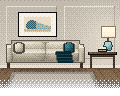 TransitionalThe middle ground of classic and modern.
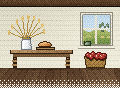 FarmhouseThe comfortable style of country homes.
Traditional questions
What is traditional interior design?
A style based on classic European rooms of the 18th and 19th centuries. Dark polished wood, furniture arranged in symmetry, panelled walls, velvet and damask, patterned rugs, and paintings in gilt frames. It looks settled, as if it had been there for years.
What colours are used in traditional style?
Cream, white or sand on the walls, or one deep colour, with burgundy, forest green, navy and brown in the fabrics and rugs. Gold appears in frames, lamps and trims. The colours are rich but muted, never bright.
What furniture is traditional?
A wing chair, a buttoned leather sofa, a sofa with rolled arms, a pedestal dining table, a sideboard, a glazed bookcase and a chest of drawers with brass handles. Legs are turned or curved, and the wood is dark and polished.
Who was Thomas Chippendale?
An English cabinet-maker of the 18th century. His pattern book, The Gentleman and Cabinet Maker's Director, was first published in 1754 and spread his furniture designs widely.
What is the difference between traditional and transitional style?
Transitional keeps the classic shapes of traditional furniture and removes the ornament. The dark polished wood becomes mid-toned, the pattern becomes plain texture, and the collections are cut down to a few pieces.
Editorial notes
Written by the Snuug team and checked on 11 November 2026. The dates and names come from the sources below. A number with no source beside it is a designers' rule of thumb, not a study. The picture and its colours are Snuug's own pixel art.
- Grustat, 15 Essential Interior Design Styles to Know Now, Architectural Digest, 5 Aug 2025 (classic furnishings; cherry, walnut and chestnut; brocade and velvet; the palette). Read for the app's style test in October 2026; the page refused our fetch on 11 Nov 2026
- Gaskill, Your Guide to 12 Popular Decorating Styles, Houzz. Read for the app's style test in October 2026
- Wikipedia, Thomas Chippendale (The Gentleman and Cabinet Maker's Director, 1754, and its four styles). Read 11 Nov 2026
- Wikipedia, Morris & Co. (founded 1861; wallpapers, textiles and furniture). Read 11 Nov 2026