Transitional style: the calm middle of classic and modern
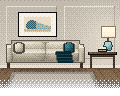
Transitional is an interior design style midway between traditional and modern: classic furniture shapes with clean, simple lines, a neutral palette of whites, creams and greys, layered textures in place of bold pattern, and only a few accessories.
What is transitional style?
Transitional style is for people who find traditional rooms too full and modern rooms too bare. It takes the comfortable, familiar shapes of classic furniture and strips them of carving, fringe and pattern. What is left is quiet and tailored: a room in soft neutrals where a panelled wall and a plain modern lamp look right together.
The name describes its place, not a date. It sits in the transition between traditional and modern, and Architectural Digest calls it "a midway style". It emerged in the mid-20th century. Its marks are a blend of curved and straight lines, little ornament, a neutral palette and few accessories.
The transitional look in five signs
- Classic shapes, made plain. A rolled-arm sofa in plain linen. A panelled door with no carving.
- Neutrals in layers. Warm white, greige, stone and taupe, tone on tone.
- Texture in place of pattern. Bouclé, linen, wool and velvet side by side, all in close colours.
- Pairs. Two lamps, two chairs, two cushions. Symmetry keeps the room calm.
- One accent, used twice. A single colour, such as teal, in a cushion and again in a throw or a print.
Transitional colours
Stay in one warm, neutral family for the walls, the sofa and the rug, and move in small steps from light to dark. A deep brown in the wood gives the room its weight. Then choose one accent colour and use it in two or three small places, so it looks intended.
- #EAE5DCWarm whiteCeilings, woodwork, lampshades.
- #D8D1C4GreigeThe walls.
- #C2BAACStoneThe sofa and the curtains.
- #8C8478TaupeA rug, cushions, a headboard.
- #5E4834CoffeeWooden furniture and frames.
- #1A505CDeep tealThe accent, used two or three times.
Transitional materials, furniture and lighting
- Woods
- Mid-toned oak, walnut and ash, neither bleached nor very dark. Satin finishes, not high polish.
- Fabrics
- Linen, wool, bouclé, cotton velvet and leather. Plain, or with a quiet weave such as herringbone.
- Other materials
- Stone and marble, glass, and metals with a brushed finish, such as brass, nickel or bronze.
- Furniture
- Classic outlines with straight, simple lines: a rolled-arm sofa, a wing chair with a slim frame, Shaker-style cabinet doors, a round pedestal table. Comfortable and solid, never ornate.
- Lighting
- Table lamps in pairs with plain drum shades, and one simple pendant or lantern. A rule designers use: light a room from at least two or three sources at two or more heights.
Transitional room by room
A transitional living room
Place a neutral sofa on the longest wall with a matching lamp at each end, and hang one picture above it. Two rules designers use: art over a sofa is about two thirds of the sofa's width, and its lower edge sits 15–25 cm above the back. The picture height calculator gives the hook height. Add two armchairs opposite, a large plain rug and the accent colour in two places. For the television, see how high to mount a TV.
A transitional bedroom
An upholstered headboard in linen or wool, bed linen in white and stone, and a pair of bedside tables with a pair of lamps. A bench at the foot of the bed and full-length curtains in a plain fabric complete it.
A transitional kitchen
Shaker-style doors are the classic choice here: a traditional frame with no ornament. Pair them with a plain stone or stone-effect worktop, simple metal handles and two or three pendants over the island or table.
Transitional style on a budget, in a rented flat
This is the easiest style to reach from where most homes already are.
- Edit first. Halve what is on show. Keep the pieces with the plainest lines.
- Make pairs. Two matching lamps or two matching cushions settle a room at once.
- Bring the fabrics to one family. Covers and throws in white, stone and taupe, in three different textures.
- Add one old thing to a new room. A second-hand wooden side table or a gilt mirror. In an old-fashioned room, add one plain modern lamp.
- Choose the accent. Buy it twice: a cushion and a print, or a throw and a vase.
Check the gaps between your furniture against living room measurements before you buy a larger rug or sofa.
What to avoid
- All one beige. Without changes of texture and one dark wood, a neutral room goes flat.
- Half and half. A room split into a modern side and a traditional side looks unfinished. Mix the two in every corner.
- Busy pattern. Large florals and strong geometrics pull the room towards other styles.
- Too many ornaments. A few larger pieces, grouped, are enough.
Transitional vs traditional, and transitional vs organic modern
Transitional vs traditional
Transitional is traditional with the volume turned down. The sofa keeps its rolled arm but loses its fringe and its floral cover. The wood turns from dark and polished to mid-toned and satin. Collections and gilt frames give way to a few plain accessories.
Transitional vs organic modern
Both are neutral and rich in texture. Organic modern is looser and closer to nature, with curved seats, raw stone and large plants. Transitional is more tailored and symmetrical, and its shapes come from classic furniture.
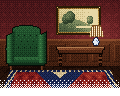 TraditionalClassic European design, as in older homes.
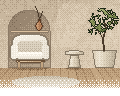 Organic modernModern design, softened with natural materials.
Transitional questions
What is transitional style in interior design?
A style midway between traditional and modern. It keeps classic furniture shapes, such as a rolled-arm sofa or a panelled door, but gives them clean lines and plain finishes. Colours are neutral, texture replaces pattern, and accessories are few.
Why is it called transitional?
Because it sits in the transition between two styles, traditional and modern, and borrows from both. It is not a historical period. The style emerged in the mid-20th century.
What is the difference between transitional and traditional style?
Traditional rooms have more of everything: dark polished wood, carving, patterned fabrics, collections and framed paintings. Transitional rooms keep the classic shapes and the symmetry, and leave out the ornament, the pattern and most of the colour.
What colours are used in transitional design?
Whites, creams, greys and taupes, layered tone on tone. Colour arrives in art and one or two accents, such as a teal cushion or a navy throw.
Is transitional the same as contemporary?
No. Contemporary means the look of the present moment. Transitional is a fixed recipe: classic shapes, modern plainness, neutral colours.
Editorial notes
Written by the Snuug team and checked on 11 November 2026. The dates and names come from the sources below. A number with no source beside it is a designers' rule of thumb, not a study. The picture and its colours are Snuug's own pixel art.
- Wikipedia, Transitional Style (a style mixing traditional and modern; mid-20th century; curved and straight lines; little ornament; whites, creams and greys; soft textures). Read 11 Nov 2026
- Grustat, 15 Essential Interior Design Styles to Know Now, Architectural Digest, 5 Aug 2025 ("a midway style"; warm neutrals, tone on tone). Read for the app's style test in October 2026; the page refused our fetch on 11 Nov 2026