Organic modern style: modern rooms, softened by nature
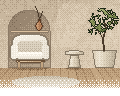
Organic modern is an interior design style that softens clean, modern rooms with natural materials and rounded shapes: curved sofas and arches, pale wood, stone, bouclé and linen, in warm neutral colours from cream to tan, with little clutter.
What is organic modern style?
Organic modern starts with a modern room, open, plain and uncluttered, and takes the hard edges off it. Corners become curves. Chrome and glass give way to wood, stone, plaster and wool. Colour drops back to the warm neutrals of those materials, so the room looks soft and light at once.
The name is recent: design magazines use it for minimalist interiors with natural textures, earthy colours, wood and stone. The word "organic" has a longer history in modern design. In 1941 the Museum of Modern Art in New York held an exhibition called Organic Design in Home Furnishings, drawn from a furniture competition. The two are not the same thing, but the wish behind them is close: modern design that is easy to live with.
The organic modern look in five signs
- Rounded shapes. A curved sofa, a pebble-shaped table, an arched alcove or mirror.
- Warm neutrals, tone on tone. Cream beside oatmeal beside sand, with no hard jumps.
- Texture you want to touch. Bouclé, slubby linen, jute, rough plaster, honed stone.
- Pale wood and stone together. An oak table beside a travertine one. Matt finishes on both.
- One large plant. An olive or a fig tree in a plain pot, in place of many small ones.
Organic modern colours
Pick four or five neutrals that sit close together and use them in layers, palest on the walls and deepest on the floor. Then add contrast in two small doses: the green of a plant, and one dark note such as a black lamp or a walnut stool. Without them, an all-beige room looks flat.
- #F0EADECreamWalls and ceilings.
- #DDCDB6OatmealThe sofa and the curtains.
- #C9B79ESandA rug, plaster, stone.
- #C4A682CamelPale wood, leather, a throw.
- #8C7A66TaupeDeeper cushions, a pot.
- #869256Olive leafPlants, and nothing else.
The paint calculator works out the litres for your walls.
Organic modern materials, furniture and lighting
- Woods
- Oak and ash in pale, matt finishes, sometimes with a little walnut for depth. Rounded edges and fluted fronts are common.
- Fabrics
- Bouclé, linen, wool and heavy cotton. Rugs in jute, sisal or undyed wool.
- Other materials
- Travertine and limestone, plaster and limewash, rattan, and matt ceramics.
- Furniture
- Low, deep and rounded: a curved sofa, a tub chair, drum and pedestal tables. Legs are short or hidden, so pieces look solid.
- Lighting
- Soft and diffused: paper and linen shades, plaster or ceramic lamp bases, a globe pendant. Lighting shops usually suggest warm white bulbs, 2700–3000 K, for living rooms and bedrooms.
Organic modern room by room
An organic modern living room
Begin with the sofa: deep, rounded, in cream or oatmeal. Put a round table in stone or wood in front of it. A rule designers use: leave 35–45 cm between the sofa and the coffee table. Lay a jute or wool rug large enough for the front legs of every seat (the rug size calculator gives the size). Finish with a tall plant and one arched mirror.
An organic modern bedroom
An upholstered headboard with rounded corners, bed linen in three close neutrals, and a ceramic lamp on a wooden bedside table. IKEA suggests about 50 cm of rug beside the bed, so your feet land on wool and not on the floor.
An organic modern dining room
A round or oval wooden table, chairs with curved backs, and a paper or rattan pendant over the middle. A linen runner and a single large bowl are all the table needs.
Organic modern on a budget, in a rented flat
You do not need a new sofa. Change what touches it.
- Swap the covers. Bouclé and linen cushion covers and one heavy throw, all in cream to sand.
- Lean an arched mirror. A tall one against the wall needs no hole, and it brings in the curve.
- Lay a jute rug. It is among the cheapest large rugs, and it hides a tired carpet.
- Trade black and chrome for wood and clay. Lamp bases, bowls, trays and pots.
- Buy one tall plant. Stand it in a plain pot or a basket.
For lamps, bulbs and textiles, cheapest first, see how to make a room cosy.
What to avoid
- Beige with no texture. Smooth, flat neutrals look dull. Every surface should differ a little from the one beside it.
- Curves everywhere. One or two rounded pieces are enough. Straight lines beside them make the curves show.
- Cool grey and bright white. They fight the warm tones. Choose cream and off-white.
- Gloss. High-shine floors, lacquer and polished chrome belong to other styles.
Organic modern vs Japandi, and organic modern vs minimalist
Organic modern vs Japandi
The two are close cousins: natural materials, quiet colour, little on show. Organic modern is the paler and rounder one, with cream walls, deep curved seats and polished stone. Japandi is darker and straighter, with low wooden furniture, black lines and paper lanterns.
Organic modern vs minimalist
Organic modern is minimalism with the warmth turned up. It keeps the clear surfaces and the open floor, then adds what a strict minimalist room leaves out: texture, wood grain, plants and soft, rounded seats.
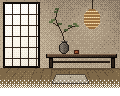 Japandi
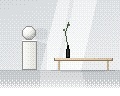 Minimalist
Organic modern questions
What is organic modern style?
A modern, uncluttered room made soft and warm with natural things: rounded furniture, arches, pale wood, stone, bouclé, linen and jute, all in warm neutral colours. It has the clean lines of modern design without the hard edges.
What colours are organic modern?
Warm neutrals, layered tone on tone: cream, oatmeal, sand, camel and taupe. Green comes from plants, and a little black or dark wood gives contrast. Cool grey and bright white are left out.
What is the difference between organic modern and Japandi?
Organic modern is paler and rounder: cream walls, curved sofas, bouclé and polished stone. Japandi is darker and straighter: oat walls, low furniture in two woods, black lines and paper lanterns. Both use natural materials and keep little on show.
Is organic modern the same as mid-century modern?
No. Mid-century modern is the style of the 1950s and 60s: teak and walnut on slim tapered legs, with mustard, orange and teal. Organic modern is recent, almost all neutral, and fuller and rounder in its shapes.
What materials are used in organic modern design?
Pale oak and ash, travertine and limestone, plaster and limewash, bouclé, linen, wool, jute, rattan, and unglazed or matt ceramics. Finishes are matt or honed, not glossy.
Editorial notes
Written by the Snuug team and checked on 11 November 2026. The dates and names come from the sources below. A number with no source beside it is a designers' rule of thumb, not a study. The picture and its colours are Snuug's own pixel art.
- Carlson, Ten interiors with a natural and calming organic modern design, Dezeen, 7 Aug 2022 (minimalist interiors with natural textures, earthy colours, wood and stone). Read for the app's style test in October 2026; the page refused our fetch on 11 Nov 2026
- The Museum of Modern Art, Organic Design in Home Furnishings, 24 Sep–9 Nov 1941. The page refused our fetch; the dates are from MoMA's exhibition history in a search summary, 11 Nov 2026