Industrial style: brick, steel and worn leather
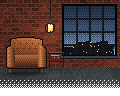
Industrial is an interior design style that takes its cues from old factories and warehouses converted into homes: exposed brick, concrete, steel and pipework, large metal-framed windows, worn leather and dark wood, in open rooms coloured grey, black, rust and brown.
What is industrial style?
Industrial style keeps what most homes hide. The brick is left bare. Beams, pipes and ducts stay in view. Floors are concrete or old boards, and windows are large grids of steel and glass. Into that shell go a few heavy, hard-wearing things: a leather sofa, a workbench for a table, steel shelves and factory lights.
It began with the reuse of empty industrial buildings. In SoHo in New York, artists began to move into disused manufacturing lofts in the 1960s, drawn by the tall ceilings and the many windows. In 1971 the zoning rules were changed to let artists live and work there. The look of those lofts has since become a style in its own right, copied in flats and houses that never held a machine. Its steel-framed windows have a long history too: Crittall, in Essex, began to manufacture metal windows in 1884.
The industrial look in five signs
- Bare brick or concrete. At least one wall is left as it was built.
- The structure on show. Steel beams, pipes, ducts and conduit, painted black or left raw.
- Steel-framed windows. Large, with slim black bars and many panes.
- Leather, dark wood and metal. A worn leather chair, a thick plank table, steel shelving.
- Factory lights. Metal pendant shades, caged lamps and bulbs with a visible filament.
Industrial colours
Nothing here is painted to be a colour. Grey comes from concrete and steel, red from brick and rust, tan from leather, black from iron. If you add a colour, keep it dark: a deep blue or a bottle green. The warmth comes from the light, so choose bulbs with an amber glow.
- #52575BConcreteFloors, worktops, plain walls.
- #2D3033CharcoalSteel, window bars, shelving.
- #7E3A26BrickThe bare wall, rusted metal.
- #B86C34Tan leatherThe armchair or the sofa.
- #3A5272Steel blueOne dark colour, if any.
- #E8A850Lamp amberThe glow of the bulbs.
Industrial materials, furniture and lighting
- Woods
- Reclaimed pine and oak, scaffold boards, thick rough-sawn planks. Dark, marked and matt.
- Fabrics
- Leather first, then canvas, heavy linen and wool. No frills and no shine.
- Other materials
- Steel, cast iron, concrete, brick, zinc, copper pipe and wired glass.
- Furniture
- Things that look as if they came from a workshop: a workbench, metal lockers, a trolley on castors, tall stools, open steel shelves. Then one deep leather chair to sink into.
- Lighting
- Enamel or metal pendants, caged wall lamps and jointed task lamps. Lighting shops usually suggest warm white bulbs, 2700–3000 K, for living rooms. See warm white vs cool white.
Industrial room by room
An industrial living room
Set a leather sofa or a pair of leather armchairs on a large wool rug, which softens a hard floor and quietens the room. Use a trolley or a slab of wood on steel legs as the table. Fill one wall with open steel shelving for books, records and plants. Dark walls and bare brick soak up light, so plan more lamps than you think you need. The lighting calculator works out the lumens.
An industrial kitchen
Open shelves on steel brackets, a stainless steel or concrete worktop, and a row of metal pendants over the island or the table. A rule lighting shops use: the bottom of each light hangs 75–90 cm above the table top. The pendant light calculator gives the height and the size.
An industrial bedroom
A metal bed frame, plain linen in grey or white, a wool blanket and a jointed lamp fixed to the wall on each side. Keep one wall dark or in brick, and the rest pale.
Industrial style on a budget, in a rented flat
You cannot strip a rented wall back to the brick, and you do not need to.
- Change the shade and the bulb. A metal pendant shade and a filament-style LED bulb. Keep the landlord's shade to put back.
- Stand up some steel. Freestanding metal shelving needs no fixings and holds a wall's worth of things.
- Find leather second-hand. An old leather armchair looks better for its scuffs.
- Lean a grid mirror. A tall mirror with a black window-style frame stands in for the steel windows.
- Use what was made for work. A wooden crate, a metal locker, a draughtsman's stool, a trolley.
What to avoid
- Hard on hard. Concrete, brick, steel and leather with nothing soft can look bleak and sound echoey. Add a rug, a throw and some plants.
- The theme bar. Fake pipes, gear wheels and vintage signs on every wall. Keep to things that do a job.
- Too little light. Bare filament bulbs are often dim. Use them for looks, and add proper lamps to read by.
- Grey everything. The style needs the warm notes: brick, leather, wood and amber light.
Industrial vs mid-century modern, and industrial vs minimalist
Industrial vs mid-century modern
Both like leather, wood and metal. Mid-century modern is finished and light: oiled teak on slim legs, with mustard and teal. Industrial is raw and heavy: rough planks on steel, with grey, black and rust. A mid-century sideboard in an industrial room is a classic mix.
Industrial vs minimalist
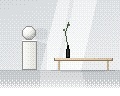
Both keep rooms open and spare. A minimalist room hides everything behind smooth white surfaces. An industrial room shows everything: the bricks, the pipes, the bolts and the wear.
 Mid-century modern
 Minimalist
Industrial questions
What is industrial interior design?
A style based on factories and warehouses that have been turned into homes. The building's working parts stay on show: brick walls, steel beams, pipes, concrete floors and big metal-framed windows. Furniture is leather, dark wood and metal.
Where did industrial style come from?
From the reuse of old industrial buildings. In SoHo in New York, artists began to move into empty manufacturing lofts in the 1960s, drawn by the high ceilings and the many windows. The raw look of those lofts became a style that people now copy in ordinary homes.
What colours are industrial?
The colours of the materials: concrete grey, charcoal, black steel, brick red and rust, and the tan of worn leather. Dark green or dark blue can be added. Warm light from the lamps does the rest.
How do I soften an industrial room?
Add things that are warm to the touch. A large wool rug on the hard floor, a sheepskin or a blanket on the leather, wooden surfaces, plants, and warm white bulbs in every lamp.
Can I have industrial style without exposed brick?
Yes. Furniture and light fittings carry the style in a plain room: steel shelving, a leather chair, a workbench table, metal pendant shades and a mirror with a black grid frame.
Editorial notes
Written by the Snuug team and checked on 11 November 2026. The dates and names come from the sources below. A number with no source beside it is a designers' rule of thumb, not a study. The picture and its colours are Snuug's own pixel art.
- Wikipedia, Industrial style (cues from old factories; weathered wood, exposed brick, industrial lighting and concrete; exposed pipes and large windows). Read 11 Nov 2026
- Wikipedia, SoHo, Manhattan (artists in the manufacturing lofts in the 1960s; the 1971 zoning change; the 1982 Loft Law). Read 11 Nov 2026
- Wikipedia, Crittall Windows (metal windows from 1884; Essex). Read 11 Nov 2026
- Grustat, 15 Essential Interior Design Styles to Know Now, Architectural Digest, 5 Aug 2025 (patinated wood, weathered leather, old mixed with new; the palette). Read for the app's style test in October 2026; the page refused our fetch on 11 Nov 2026