Scandinavian style: daylight, pale wood and useful things
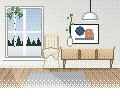
Scandinavian style is the interior design style of the Nordic countries: white or pale walls, light wood such as birch, pine and ash, simple furniture made to be used, wool and linen for warmth, and little on show, so the room makes the most of its daylight.
What is Scandinavian style?
Scandinavian style comes from countries with long, dark winters, and it shows. Walls are white to throw daylight deep into the room. Wood is pale. Furniture is plain, light on its legs and made to be used every day. Wool, sheepskin and candlelight add the warmth that the colours hold back.
As a design movement it emerged in the early 20th century and flourished in the 1950s across Denmark, Finland, Norway, Sweden and Iceland. Designers such as Alvar Aalto, Arne Jacobsen, Hans J. Wegner, Børge Mogensen and Poul Henningsen made simple, well-built things for ordinary homes. A 1954 exhibition at the Brooklyn Museum, Design in Scandinavia, began the fashion for "Scandinavian Modern" in America. Some pieces from those years are still made: Henningsen's PH lamp dates from 1926, and Jacobsen's Egg chair from 1958.
The Scandinavian look in five signs
- White walls, bare windows. Nothing blocks the daylight: curtains are sheer, or left off.
- Pale wood everywhere. Floors, tables and chairs in birch, pine, ash or light oak, never stained dark.
- Furniture you can see under. Sofas, sideboards and chairs stand on slim legs, so the floor runs on beneath them.
- Wool and sheepskin. A throw over the sofa, a sheepskin on a chair, a wool rug under bare feet.
- Lamps and candles. Several small lights at different heights, not one bright one in the ceiling.
Scandinavian colours
White comes first, then grey, then the colour of the wood. If there is another colour it is a pale one, used on a cushion, a print or one chair. A small touch of something dark, such as fir green or black, keeps a white room from looking washed out.
- #F4F4F0Snow whiteWalls, ceilings and woodwork.
- #DCDDD9Mist greyThe sofa, a rug, bed linen.
- #D4BA96BirchFurniture and floors.
- #A2896BOiled oakA table top, a chair frame.
- #AEC5DDSky blueThe pastel: cushions, a print.
- #22392CFir greenPlants, and one small dark note.
Scandinavian materials, furniture and lighting
- Woods
- Birch, pine, ash, beech and light oak, finished with soap, oil or a white-tinted oil so they stay pale.
- Fabrics
- Wool, linen and cotton, plus sheepskin. Plain, or with a simple stripe, check or leaf print.
- Other materials
- Glass, glazed ceramics, leather, rattan and woven paper cord for chair seats.
- Furniture
- Simple shapes with rounded edges and slim, tapered legs. Spindle-back chairs, low sideboards, open shelves on the wall.
- Lighting
- A rule designers use: light a room from at least two or three sources at two or more heights. Choose warm white bulbs, 2700–3000 K on the box, and add candles. The lighting calculator works out the lumens for your room.
Scandinavian room by room
A Scandinavian living room
Start with a sofa in pale grey or oat on wooden legs, then add one armchair with a sheepskin and a wool rug. A rule designers use: the rug runs at least 15 cm past each end of the sofa (the rug size calculator does the sums). Keep the coffee table light, in wood or glass. On the wall, two or three framed prints are plenty. Stand a floor lamp by the armchair and a plant by the window.
A Scandinavian bedroom
White bed linen, a wool blanket folded at the foot, and a wooden stool or small table at each side. Fit a blind or a sheer curtain, so the room is light when you want it. One pendant or wall lamp by the bed frees the bedside table.
A Scandinavian kitchen and dining room
A plain wooden table, chairs that do not all match, and one pendant low over the table. A rule lighting shops use: the bottom of the light hangs 75–90 cm above the table top. The pendant light calculator gives the height and the size for your table. Keep everyday china on an open shelf.
Scandinavian style on a budget, in a rented flat
Rented flats often have white walls already, which is most of the work done.
- Let the light in. Tie back or take down heavy curtains, and store them to put back when you leave.
- Move the lamps you own. One in each corner, at different heights. Leave the ceiling light off in the evening.
- Go white on the bed. Plain white bed linen changes a bedroom more than any other single buy.
- Add one wool throw and one sheepskin. They do the job of colour.
- Look for pine and birch second-hand. Old pine tables, stools and chests are easy to find, and suit the look as they are.
Twelve more changes, cheapest first, are in how to make a room cosy.
What to avoid
- Dark, heavy furniture. A mahogany sideboard or a black leather sofa pulls against everything else in the room.
- Bold colour on the walls. Colour here arrives in small things you can move.
- White with nothing soft. Without wool, wood and warm light, a white room can look bare. The textiles are half the style.
- One ceiling light. The look depends on low lamps and candles.
Scandinavian vs Japandi, and Scandinavian vs minimalist
Scandinavian vs Japandi
Japandi is Scandinavian style mixed with Japanese design. It is darker and lower: warm oat walls in place of white, a second, dark wood beside the pale one, thin black lines, and fewer things out. Choose Scandinavian if you want the brightest room you can have. Choose Japandi if you want it quieter and earthier.
Scandinavian vs minimalist
Both are plain and uncluttered. A minimalist room keeps taking away until only what is needed is left, and its surfaces are smooth and clear. A Scandinavian room stops sooner. It keeps the grain of the wood, the sheepskin, the candles and the row of plants, because comfort is the point.
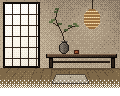 Japandi
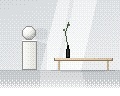 Minimalist
Scandinavian questions
What is Scandi style?
Scandi is short for Scandinavian style: the light, simple, practical look of homes in Denmark, Sweden, Norway, Finland and Iceland. White walls, pale wood, plain furniture on slim legs, wool and linen, and lamps in every corner.
What colours are used in Scandinavian interior design?
White and pale grey for the walls, the tones of light wood, and soft pastels such as sky blue or sage if there is colour at all. Black appears only in small lines: a lamp, a frame, a chair leg.
What is the difference between Scandinavian and minimalist style?
A minimalist room takes away until only what is needed is left. A Scandinavian room is simple too, but it sets out to be comfortable: wood, wool, sheepskin, candles, plants and a few objects you are fond of all stay.
What wood is used in Scandinavian furniture?
Pale woods that grow in the north: birch, pine, ash and beech, and light oak. They are left pale, with soap, oil or a white-tinted oil, never a dark stain.
What is hygge?
Hygge is a Danish and Norwegian word for cosiness and good company. In a room it usually means low, warm light, candles, blankets and somewhere soft to sit together.
Editorial notes
Written by the Snuug team and checked on 11 November 2026. The dates and names come from the sources below. A number with no source beside it is a designers' rule of thumb, not a study. The picture and its colours are Snuug's own pixel art.
- Wikipedia, Scandinavian design (early 20th century, the 1950s, the five countries; the designers; the Lunning Prize 1951–1970; Design in Scandinavia at the Brooklyn Museum, 1954; the PH lamp 1926 and the Egg chair 1958). Read 11 Nov 2026
- Grustat, 15 Essential Interior Design Styles to Know Now, Architectural Digest, 5 Aug 2025 (the palette and the materials). Read for the app's style test in October 2026; the page refused our fetch on 11 Nov 2026
- Wikipedia, Hygge (a Danish and Norwegian word). Read 11 Nov 2026