Wabi-sabi interior design: beauty in the worn and the imperfect
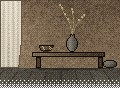
Wabi-sabi is a traditional Japanese idea of beauty in things that are imperfect, impermanent and incomplete. As an interior design style it means rough plaster, weathered wood, handmade ceramics, linen and stone in muted earth colours, with few objects and plenty of empty space.
What is wabi-sabi?
Wabi-sabi is a traditional Japanese idea of beauty: the beauty of things that are imperfect, impermanent and incomplete. Wabi can be translated as subdued, austere beauty, and sabi as rustic patina. In a home it shows as rough walls, wood that has weathered, pots made by hand, and the nerve to leave a space empty.
The idea has roots in Zen Buddhism and grew up with the tea ceremony. The Zen priest Murata Jukō (1423–1502) replaced the ceremony's gold, jade and porcelain with plain, rough utensils of wood and clay. The tea master Sen no Rikyū (1522–1591) carried the ideal into the design of his teahouses. Western designers took it up much later: Leonard Koren's book Wabi-Sabi for Artists, Designers, Poets & Philosophers came out in 1994.
The wabi-sabi look in five signs
- Walls with texture. Limewash, clay or rough plaster that shows the sweep of the trowel.
- Wood that shows its age. Knots, cracks, dents and grey weathering are kept, not filled or sanded away.
- Pots made by hand. A bowl that leans, a glaze that ran, a vase with a thumbprint in it.
- Space left empty. One branch in one vase on an otherwise bare bench. Nothing is centred or paired.
- Mending you can see. A patched cushion, a darned throw, a cracked dish joined again.
Wabi-sabi colours
Every colour here is the colour of a material: undyed linen, dry grass, clay, stone, bark, charcoal. Keep them matt, and let them sit close together, so the eye goes to texture and shadow.
- #DCD3C0Raw linenCurtains, bedding, loose covers.
- #B09C70Dried grassStems, baskets, straw matting.
- #7A664EClayPlastered or limewashed walls.
- #5C574DStoneThe floor, a basin, a large pot.
- #5C4A38BarkWeathered wood furniture.
- #2C2924CharcoalOld iron, a dark glaze, deep shadow.
Wabi-sabi materials, furniture and lighting
- Woods
- Old oak, elm, chestnut and cedar: reclaimed boards, a plank with its bark edge, timber left unfinished or only oiled.
- Fabrics
- Linen, hemp, raw cotton and wool, undyed and unironed. Creases are welcome.
- Other materials
- Clay and lime plaster, stone, stoneware, paper, and metal that has gone dull or rusty.
- Furniture
- Low, plain and a little heavy: a plank bench, a slab table, a stool cut from a log. There are few pieces, and none of them match.
- Lighting
- Low and soft, from paper or linen shades and from candles. Shadow is part of the look, so do not light every corner.
Wabi-sabi room by room
A wabi-sabi living room
A sofa under a loose linen cover, an old bench or a slab of wood as the table, and one large pot with a branch or dried grasses. Leave at least one wall bare, so its texture can be seen. Sit close to the floor if you like to: a thick wool rug and floor cushions suit the room.
A wabi-sabi bedroom
A low bed, linen bedding in two earth tones left unironed, a stool for a bedside table and one small lamp with a ceramic base. Hang linen at the window, where it softens the daylight.
A wabi-sabi kitchen
Open shelves of handmade bowls and cups, no two alike. A table that has been used for years, with its marks left in. Wooden boards, a stone mortar, and a jug of whatever is in the hedgerow this week.
Wabi-sabi on a budget, in a rented flat
This may be the cheapest style there is, because it asks you to keep what you would have replaced.
- Mend, and let it show. Darn the throw, glue the plate, keep the table with the ring marks.
- Buy pottery second-hand. Charity shops often have studio stoneware. Choose single pieces, never a set.
- Bring a branch home. One fallen branch or a handful of dry grasses in a plain jar.
- Cover the sofa. A large length of washed linen or heavy cotton, tucked in, changes the room for the price of the cloth.
- Soften the walls. If you may not paint, hang a length of undyed linen. If you may, a limewash or a matt paint in a clay colour gives the texture. The paint calculator gives the litres.
Not sure what your landlord allows? Magnolia walls covers how to ask.
What to avoid
- New things made to look old. Factory "distressed" furniture is the opposite of the idea. Real wear, or none.
- Shine. Gloss paint, chrome and polished stone reflect too much. Choose matt and honed finishes.
- Pairs and symmetry. Two matching lamps or a centred row of vases looks arranged. Offset things, and use odd numbers.
- Filling the space. Rustic clutter is a different style. Here, most of the room is left empty.
Wabi-sabi vs Japandi, and wabi-sabi vs organic modern
Wabi-sabi vs Japandi
Japandi borrows from wabi-sabi but tidies it. Japandi furniture is new, clean-lined and carefully placed, with a few handmade accents. In a wabi-sabi room the old, rough and mended things are the whole point, and nothing looks new.
Wabi-sabi vs organic modern
Both are earthy and neutral. Organic modern is the smoother of the two: pale cream walls, rounded new furniture, bouclé and polished stone. Wabi-sabi is darker, rougher and older, and it has straight planks where organic modern has curves.
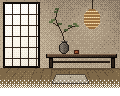 JapandiJapanese and Scandinavian design, mixed.
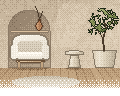 Organic modernModern design, softened with natural materials.
Wabi-sabi questions
What does wabi-sabi mean?
It joins two Japanese words. Wabi can be translated as subdued, austere beauty, and sabi as rustic patina. Together they name a taste for things that are imperfect, impermanent and incomplete: a worn step, a mended bowl, a wall that shows the hand that plastered it.
What is wabi-sabi interior design?
A way of furnishing a home with rough, natural, ageing materials and very few objects. Typical pieces are limewashed or clay-plastered walls, weathered wood, handmade pottery, crumpled linen and stone, in muted earth colours.
What colours are wabi-sabi?
The colours of undyed and weathered materials: raw linen, dried grass, clay, stone grey, bark brown and charcoal. Nothing bright, nothing glossy, and no pure white.
Is wabi-sabi the same as minimalism?
No. Both keep few things out, but a minimalist room is smooth, new and exact, and a wabi-sabi room is rough, old and uneven. Minimalism removes the marks of use. Wabi-sabi keeps them.
What is kintsugi?
Kintsugi is the Japanese practice of mending broken pottery with lacquer mixed with gold, so the repair shows. It is often given as an example of wabi-sabi.
Editorial notes
Written by the Snuug team and checked on 11 November 2026. The dates and names come from the sources below. A number with no source beside it is a designers' rule of thumb, not a study. The picture and its colours are Snuug's own pixel art.
- Wikipedia, Wabi-sabi (the definition; wabi and sabi, quoting the Stanford Encyclopedia of Philosophy; Murata Jukō, Sen no Rikyū; kintsugi; Leonard Koren, 1994). Read 11 Nov 2026
- Architectural Digest India, What is wabi sabi and why it is the most distinct design style (imperfection, raw materials and the passage of time). Read for the app's style test in October 2026, from a search summary